
Within This Issue
What is fun? What do we mean when we use this little word? And what is fun? Well an awful lot actually it seems.
As Ellie Griffiths points out the word ‘conjures up images of laughter, activity, joviality and noise – being together in a lively or boisterous way’ (see page 10). But fun can be of a quieter kind in a less active, but equally companionable way. Lucy Garland says that ‘fun should be at the heart of everything and that it has the power to change hearts and minds’ (see page 7). But Neil Mullen reminds us that, although play and fun are important for their own sake, they can also lead to progress in cognition, improvements in mental health, and increased wellbeing (see page 45). Similarly, Maureen Phillip says ‘….when we work together, we learn together, and the outcome is fun and more inclusive for everyone. Learning and development doesn’t always have to be onerous or heavy it can be fun’ (see page 18)
A key message is the need to take painstaking care when planning activities and being flexible. As Melanie Nind says (see page 47), we would surely all agree that we would like to foster laughing together, being companionable together, sharing fun-filled interactions with the people but, do we consciously create environments that permit these or do we rely too much on chance and seizing moments that present themselves?
We all differ in what we find fun. Who would have thought that Isaac Archibald could find fun in an emergency hospital setting (see page 5) or that Helen Fitchett could create pockets of fun during night-time care routines (see page 6). Thinking outside the box is crucial to providing fun activities.
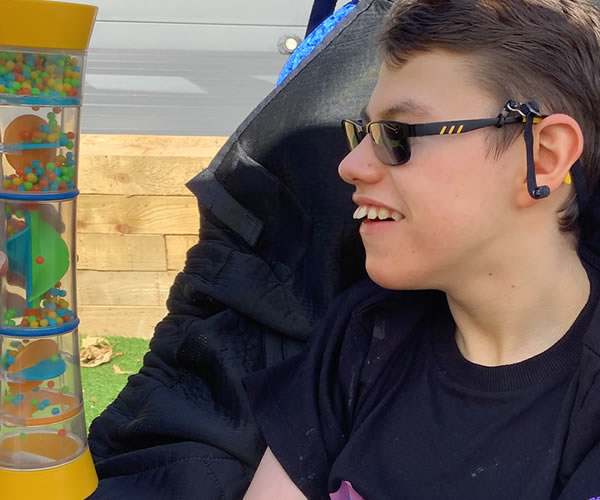
Equally important are: knowing the person well, knowing what they might enjoy and what they definitely wouldn’t; taking time to sit and play with them and be uninterrupted by anything else that is going on around; and always being attentive to the person’s responses looking for signs of like and dislike and requests for more or to stop. This is illustrated well by Jane Godfrey’s descriptions about how she interacts with her 13-year-old son Joel (see page 2).
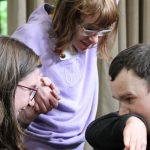
We have wonderful contributors to this issue of PMLD Link who show children and adults being playful and having fun and how these can make life better for them. We feature theatre performances, movement, music and art activities and events, festivals, and a wide range of activities in schools and adult settings. Sit back, read and enjoy. Have fun and be inspired !
We have had so many great contributions that we could not fit them all into this issue and the others will appear in our Winter issue.
Guest Editors: Maureen Phillip, Bella Travis and Rob Ashdown